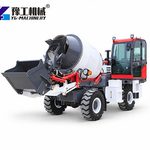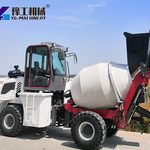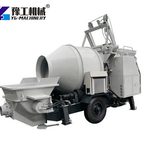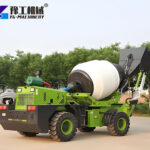
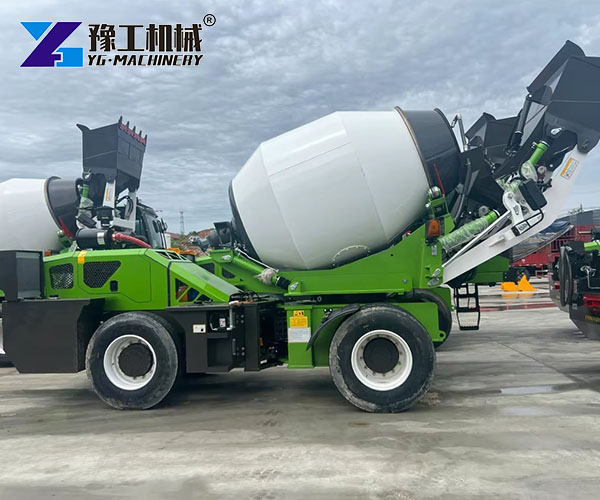
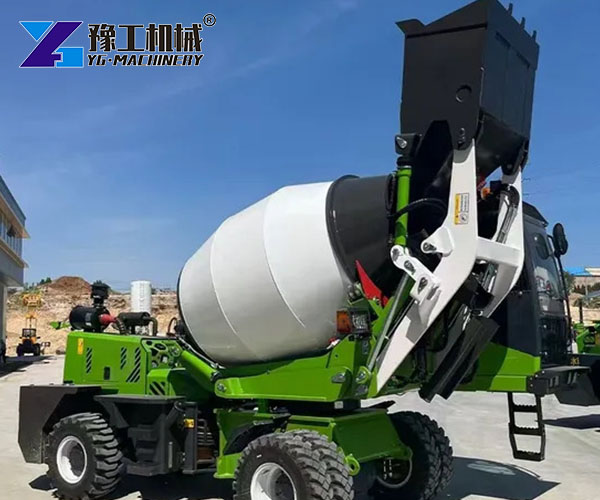
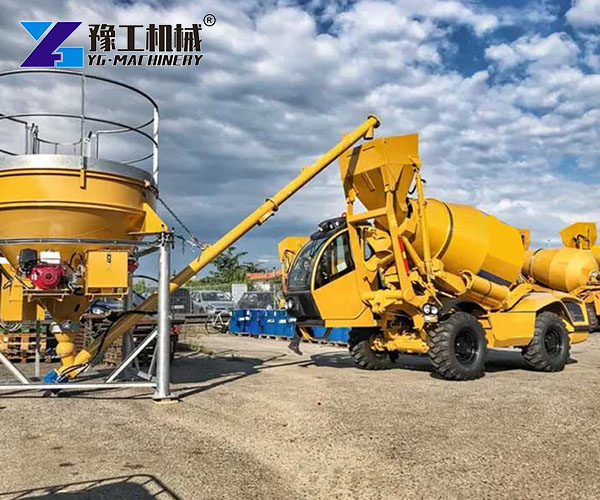
A Self Loading Cement Mixer combines material loading, mixing, transport, and discharge in one machine. It is useful when concrete demand is flexible, pour points are scattered, or ready-mix supply is slow. This guide explains where it fits, where it does not, and how to choose a model.
Self Loading Cement Mixer Models and Specifications
YG Machinery offers four models. Match output, power, climbing ability and dimensions to your site conditions.
| Model | YG1.8 | YG2.6 C | YG3.5 C | YG4.0 C |
| Output per Lot | 1.6 m³ | 2.6 m³ | 3.5 m³ | 4.0 m³ |
| Production Capacity | 8 m³/h | 11 m³/h | 15.5 m³/h | 18 m³/h |
| Engine Power | 78 KW | 78 KW | 85 KW | 91 KW |
| Climbing Capacity | 30° | 30° | 40° | 40° |
| Weight | 6300KG | 7000KG | 8250KG | 9000KG |
| Length/width/height | 6700*2340*2700mm | 6650*2700*3200mm | 7300*2750*3350mm | 7700*2950*3400mm |
| Wheelbase | 2500mm | 2770mm | 2750mm | 2950mm |
Key Advantages on Site
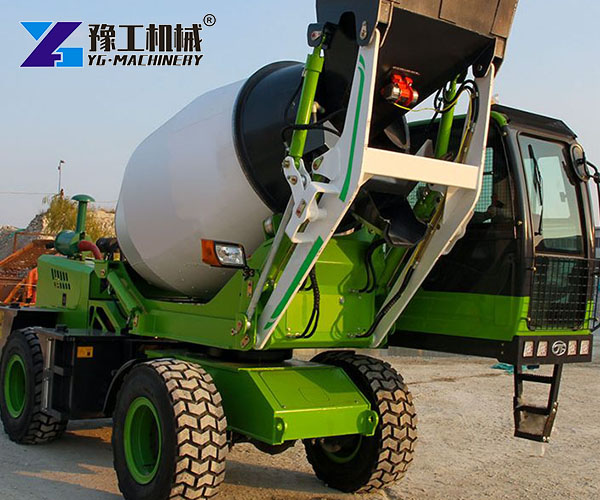
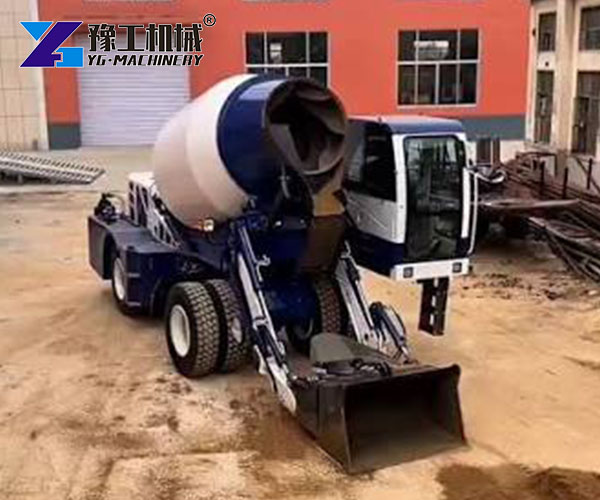
A self loading concrete mixer suits jobs where ready-mix supply is costly or unavailable. The operator loads sand, cement, and aggregate on site, controls the mix, and drives the batch to the pour point.
Integrated work. Loading and mixing happen in one unit. This reduces dependence on a separate loader and stationary mixer.
Flexible movement. The machine can move between work points. Check ground conditions and slopes first.
On-demand output. Crews can produce concrete as work progresses. A self loader mixer also gives better control over small or changing pours.
Simpler coordination. Fewer machines can mean simpler scheduling and fewer personnel moves on some sites.
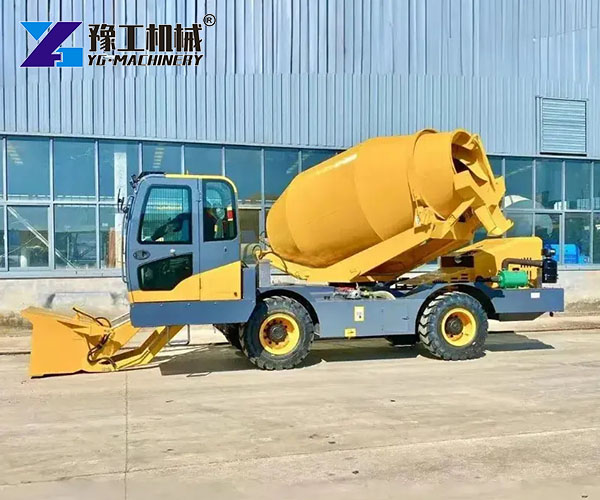
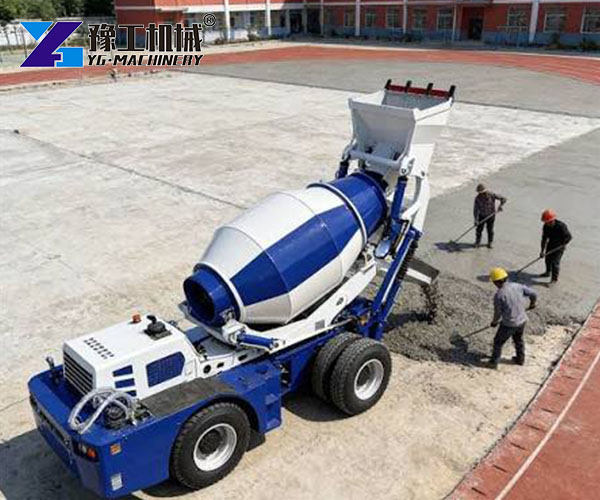
Self Loader Concrete Mixer Applications by Project Type
- Road Construction and Road Repair.Rural roads, access roads, curbs, gutters, shoulders, and localized repairs often have many small pour points. The machine can move with the crew and produce concrete at each stop. The route must allow safe travel.
- Residential and Small Building Construction.Houses, low-rise buildings, and small commercial structures need concrete for foundations, floors, and hardstands. A self loading concrete mixer truck can serve these pours when volume is moderate and the site has room for loading and turning. Check continuous pour volume and quality rules first.
- Rural Infrastructure and Community Development.Village roads, public squares, and small community buildings are often spread out. Fixed plants may be hard to deploy. This equipment can help when access roads and ground bearing capacity are adequate.
- Water Conservancy and Irrigation Projects.Irrigation channels, drainage ditches, and small water structures often need segmented work along a line. A self loading mobile concrete mixer can move with the work front. Road conditions and terrain limits still matter.
- Bridge Approaches and Small Infrastructure.Approach slabs, guardrail foundations, and ancillary structures may fit when pour points are scattered and delivery routes are long. Large bridge main structures should not be assumed suitable. Check design, supply continuity, and quality control first.
- Drainage and Utility Infrastructure.Drainage ditches, pipe foundations, and small inspection wells often need segmented pours and local repairs. The machine needs enough entry and exit space. Trench safety rules must be followed.
- Remote and Mountain Construction.Remote roads and small mountain projects often face long delivery distances. This equipment can add value, but slope, road width, ground bearing capacity, and climbing ability must be confirmed.
- Industrial and Commercial Site Development.Small warehouses, yard hardening, localized floors, and ancillary facilities may fit when demand is small and phased by area. For large continuous pours, check actual output and supply plans carefully.
Where a Self Loading Mixer Truck Fits Best
A self loading mixer truck is worth evaluating when pour points are scattered, single pours are moderate, and on-site concrete production has real value. It also helps when ready-mix delivery is slow, costly, or hard to arrange. Before committing, confirm that access roads, turning space, and ground conditions allow safe movement between work points.
When a Self Loader Concrete Mixer Is Not the Right Fit
- Large continuous pours. Large floors and very large slabs may exceed practical capacity. Central batching or ready-mix supply may be better.
- Strict mix control. Projects with approved mix designs, tight measurement accuracy, and strict testing need matching control configurations.
- Restricted sites. Narrow roads, steep slopes, and low bearing capacity can limit access. Check turning radius, dimensions, load limits, and safe travel conditions.
How to Judge Project Fit
Ask:
How much concrete per day? Is the pour continuous?
One fixed site or many scattered points?
Are roads, slopes, space, and ground bearing capacity adequate?
Is ready-mix easy to get? How far is delivery?
Does output, drive type, and discharge reach meet the need?
What are purchase, fuel, labor, maintenance, and transport costs?Does measurement and mixing performance meet the specification?
Choosing a Self Loading Cement Mixer Model
- Capacity. Rated drum capacity is not hourly output. Assess loading, mixing, travel, discharge, and refill time together.
- Drive and travel. For muddy ground or mountain roads, check four-wheel drive, ground clearance, and climbing ability.
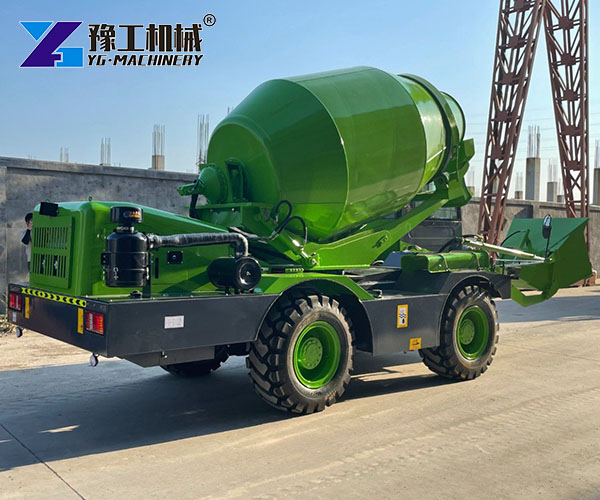
- Configuration. Loading mechanism, cab operation, measurement system, and discharge structure affect efficiency.
- Return. Compare purchase, rental, and traditional equipment combinations, not just price.
FAQ
What projects suit a Self Loading Cement Mixer?
Road repair, residential work, rural infrastructure, irrigation, drainage, and remote sites with moderate, scattered demand.
Can it replace a batching plant?
Not for large continuous pours or strict high-volume supply. It is a site-based production tool.
Is it suitable for large commercial projects?
Only when demand is moderate and phased. Large slabs need a full capacity review.
What site conditions should I confirm?
Road width, slope, ground bearing capacity, turning space, and access to materials.
Match the Self Loading Concrete Mixer to Your Project
A Self Loading Cement Mixer can be a practical site-based solution when pour points are scattered and concrete demand is moderate. Suitability still depends on daily output, site conditions, machine capacity, and quality requirements. Review the models above, then contact YG Machinery for specifications and a quote.【WhatsApp/WeChat/Phone/Skype】+86 13937183602