Rock excavation is a common challenge in mining, quarrying, foundation construction, and road projects. Hard rock can slow progress and increase operating costs. Traditional equipment may also require multiple machines, especially when drilling and splitting are separate operations. The Excavator Rock Drill and Splitter from YG Machinery combines drilling and rock splitting in one system. But how does it compare with hydraulic breakers, separate splitters, and other rock-breaking methods? This guide explains the key differences, applications, and factors to consider before purchasing.
Why Are More Projects Considering an Excavator Rock Drill and Splitter?
Contractors need equipment that matches rock conditions, project schedules, and site restrictions. Hydraulic breakers are widely used for direct impact breaking, but repeated impacts may create significant vibration and noise. Separate drilling and splitting equipment can also require additional setup and coordination.
An all-in-one rock drill and splitter can reduce equipment movements and simplify the workflow. It can be worth considering for projects that require controlled rock separation or work in areas where vibration must be managed.
However, no single machine suits every project. The right choice depends on geology, production targets, working space, and total operating costs.
What Is an Integrated Drilling and Splitting Machine?
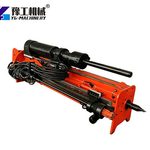
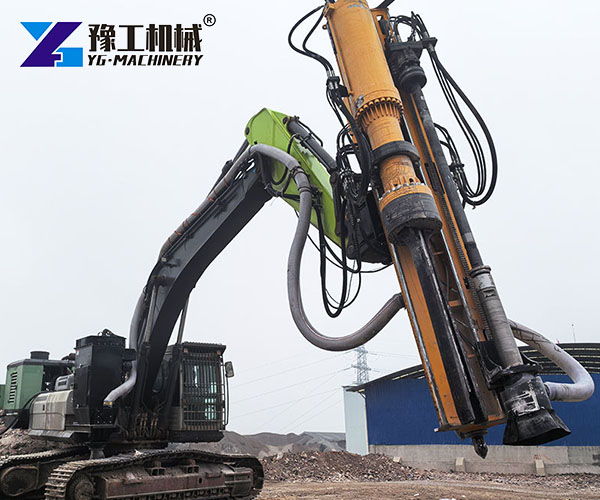
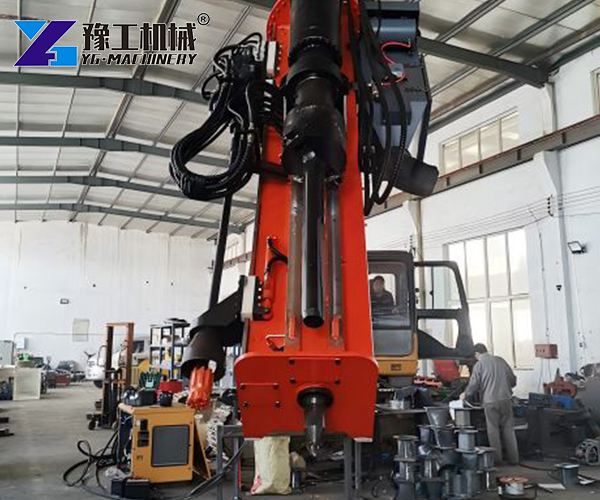
An Integrated Drilling and Splitting Machine combines two operations in one system: drilling holes into rock and applying hydraulic force to split it.
Main Components and Functions
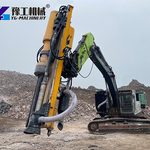
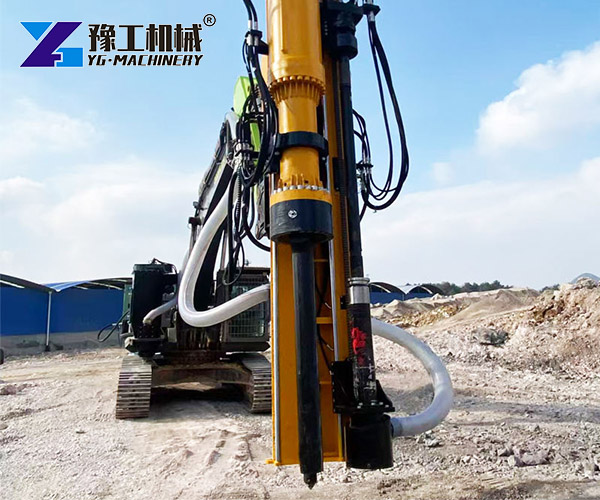
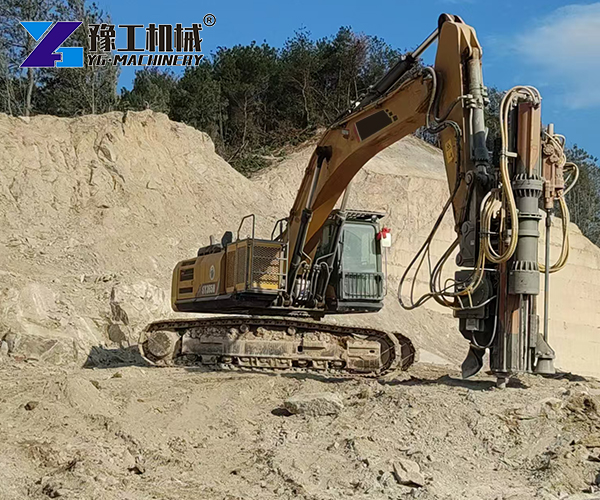
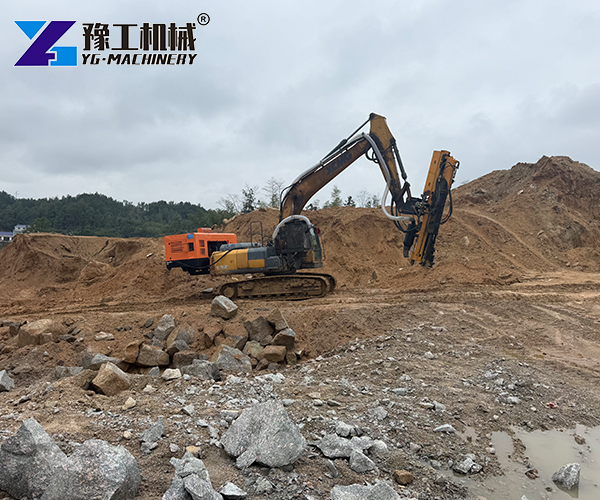
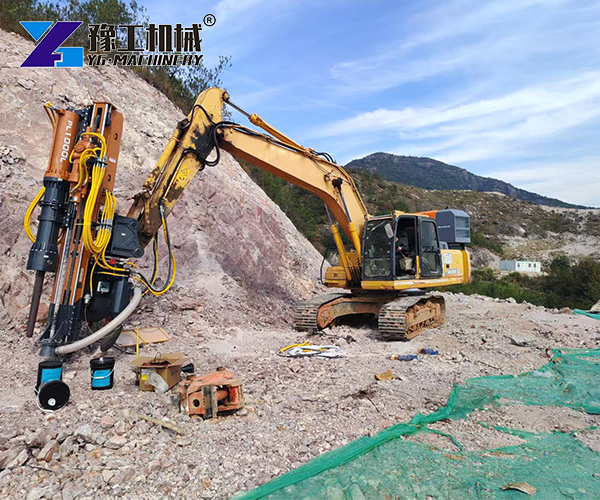
A typical rock drill splitter machine includes a drilling unit, a hydraulic splitting mechanism, and supporting hydraulic and control systems. Depending on the design, it can be mounted on a compatible excavator.
The drilling unit prepares holes in the rock. The splitting mechanism then applies force through these holes to create cracks. The resulting rock sections can be removed using suitable excavation equipment.
How Does the Machine Work?
The process generally follows four steps:
- Positioning: Place the equipment at the target location.
- Drilling: Create holes at the required depth and spacing.
- Splitting: Apply hydraulic force to initiate cracks in the rock.
- Removal: Clear the separated material and prepare for the next cycle.
Rock strength, natural fractures, hole spacing, and operating parameters all affect the result.
What Traditional Equipment Is Available?
Several alternatives are commonly used in rock excavation:
- Hydraulic breakers: Use repeated impacts to fracture rock.
- Hydraulic splitters: Apply mechanical or hydraulic force through pre-drilled holes.
- Independent drilling equipment: Creates holes for subsequent splitting, blasting, or other operations.
- Blasting: Uses explosives to fragment rock and requires appropriate planning, authorization, and safety controls.
Each method has different equipment requirements and operating conditions.
What Are the Key Differences Between an Excavator Rock Drill and Splitter and Traditional Equipment?
Working Principles
An integrated system drills holes before splitting the rock. A hydraulic breaker uses repeated impacts, while a separate hydraulic splitter generally relies on holes created by another machine. Blasting uses explosive energy to fracture the rock.
These methods can produce different fracture patterns and fragment sizes. The outcome depends on the rock structure, equipment settings, and excavation plan.
Workflow and Equipment Coordination
A combined drilling and splitting system can reduce the need to coordinate separate drilling and splitting machines. This may simplify equipment positioning and handovers between operations.
Traditional equipment can still be efficient when the workflow is straightforward. For example, a hydraulic breaker can begin breaking accessible rock without a separate drilling stage.
Productivity and Operating Efficiency
Productivity depends on drilling speed, splitting time, rock properties, material removal, and equipment downtime.
An integrated system may improve the overall workflow when drilling and splitting are repeated frequently. However, it is not necessarily faster in every application. Contractors should compare complete operating cycles rather than evaluating splitting speed alone.
Vibration, Noise, and Site Conditions
Hydraulic breakers produce impact-related vibration and noise. A hydraulic rock drill splitter generally reduces impact-related vibration, but drilling still creates noise and vibration. Actual site conditions should be measured where sensitive structures are nearby.
Mechanical splitting may be an option for some projects with restrictions on blasting. Nevertheless, it does not eliminate all environmental impacts, and local requirements must be followed.
Equipment Investment and Total Cost
Purchase price is only one part of the cost calculation. Buyers should also consider fuel, hydraulic energy, drilling tools, wear parts, maintenance, labor, and equipment movements.
An integrated machine may reduce some coordination and handling costs. Its overall economic value depends on utilization, production rate, and maintenance requirements.
Rock Compatibility and Operating Flexibility
Rock hardness, joint patterns, fractures, and geological structure influence the performance of every method. Working space, excavator access, required excavation accuracy, and acceptable overbreak also matter.
A breaker may be suitable for general breaking, while controlled splitting may be preferable when preserving selected rock sections is important. Equipment selection should follow the project requirements.
Equipment Comparison Table
| Factor | Integrated Drill and Splitter | Hydraulic Breaker | Separate Hydraulic Splitter |
| Working principle | Drilling and splitting | Impact breaking | Splitting through drilled holes |
| Drilling requirement | Integrated or configured into the system | Usually not required | Usually separate |
| Workflow | Combines two operations | Direct breaking | Multiple operations |
| Vibration | Generally less impact-related vibration | Impact-related vibration | Generally less impact-related vibration |
| Equipment setup | Depends on machine design | Relatively straightforward | May require a separate drill |
| Cost assessment | Total system operating cost | Breaking rate and wear costs | Drilling, splitting, and support costs |
Which Applications Are Suitable for Controlled Rock Excavation?
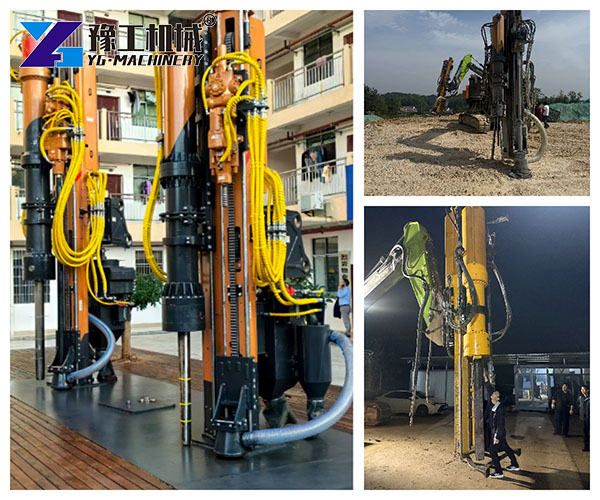
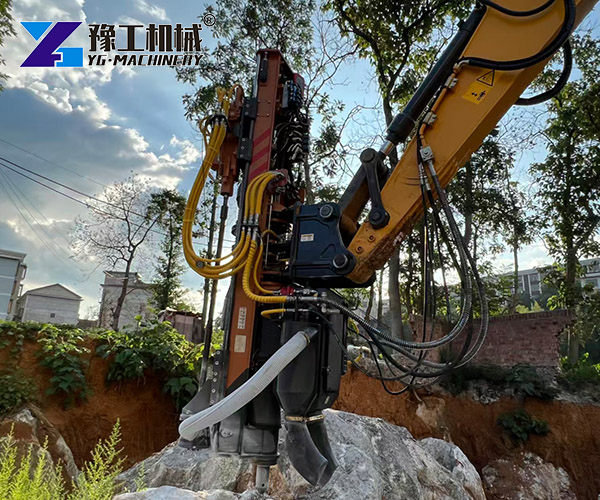
An integrated rock drill and splitter may be useful in several types of projects.
Mining and Quarrying
It can support selected rock separation and block extraction where the geological conditions and production targets are suitable. Contractors should assess the required output and the value of the recovered material.
Foundation Excavation
Hard-rock foundations and localized excavation may require a controlled approach. Equipment size, working clearance, and nearby structures should be considered before selecting a machine.
Tunneling, Slopes, and Restricted Sites
For suitable applications, splitting may help control rock separation in areas where excavation accuracy or vibration management matters. Access limitations, drilling direction, and site safety remain important considerations.
When Is Another Method Better?
A hydraulic breaker may be more practical for straightforward, high-volume breaking. Other methods may be preferable when drilling access is limited, geological conditions are unsuitable, or the project requires a different production method.
The objective is to select the most effective process, not simply the most integrated equipment.
How Should Buyers Choose the Right Rock-Breaking Equipment?
Before purchasing from YG Machinery, consider these seven factors:
- Define the objective. Decide whether the priority is breaking speed, controlled splitting, or reduced impact-related vibration.
- Assess rock conditions. Review rock strength, joints, fractures, and geological structure.
- Estimate project volume. Calculate daily output, project duration, and expected equipment utilization.
- Check site restrictions. Consider working space, noise limits, vibration requirements, and hydraulic or power availability.
- Calculate total cost. Include labor, energy, consumables, maintenance, and equipment movements.
- Verify specifications. Confirm drilling capacity, hole depth, splitting force, excavator compatibility, and application limits.
- Conduct a field test. Use representative rock to measure actual productivity and cost per cubic meter.
A practical field test provides a stronger basis for comparison than purchase price or rated performance alone. When comparing a drilling and splitting machine with alternatives, test the complete workflow.
Is This Excavator Rock Drill and Splitter Worth Buying?
This integrated system combines two operations and may simplify equipment coordination. It can be a practical option for projects requiring controlled rock separation and repeated drilling cycles.
Traditional hydraulic breakers remain useful for direct impact breaking, while separate splitters can serve specific rock excavation requirements. The best choice depends on rock conditions, productivity targets, site restrictions, and total operating costs.
YG Machinery can help buyers evaluate their project requirements and identify a suitable equipment configuration. Contact the team with your rock conditions, excavator specifications, and project goals to discuss the right solution.【WhatsApp/WeChat/Phone/Skype】+86 13937183602