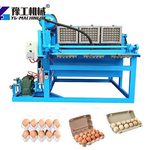
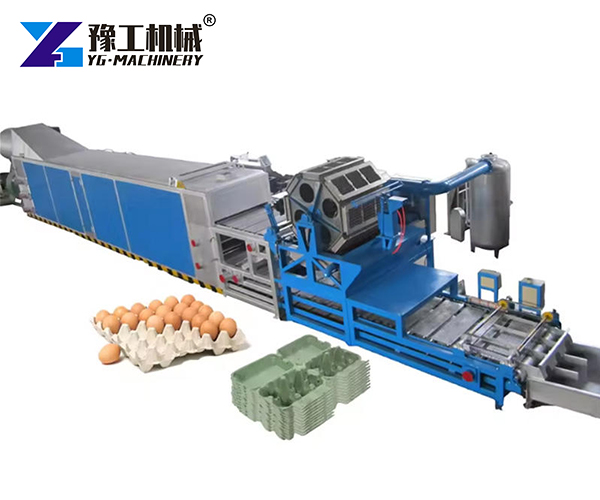
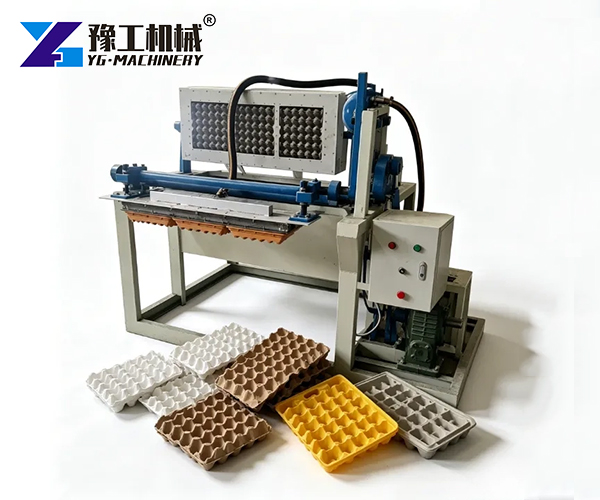
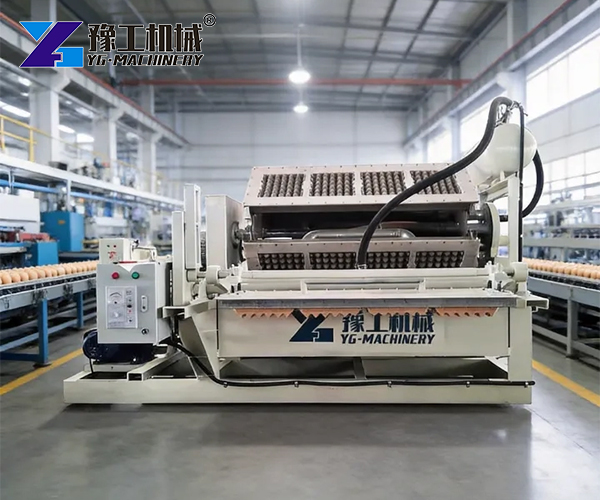
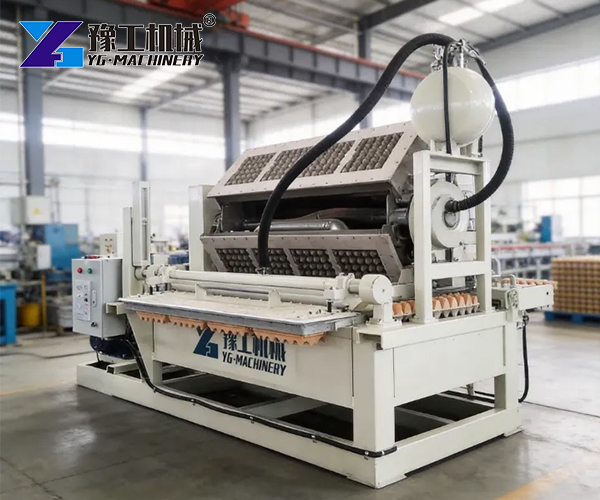
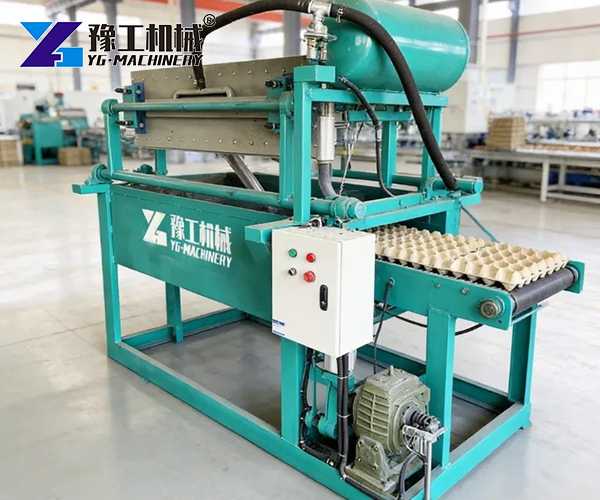
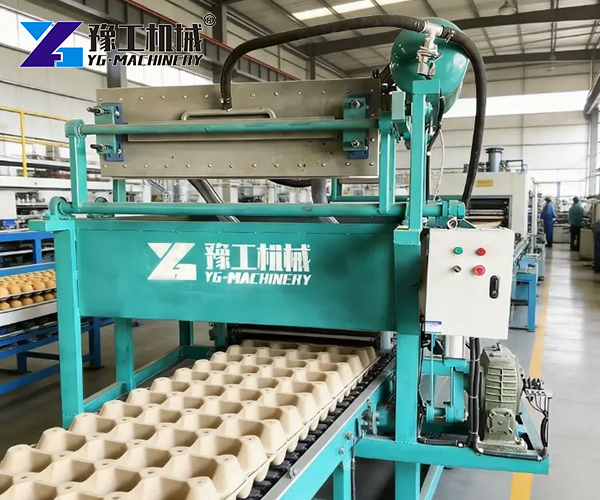
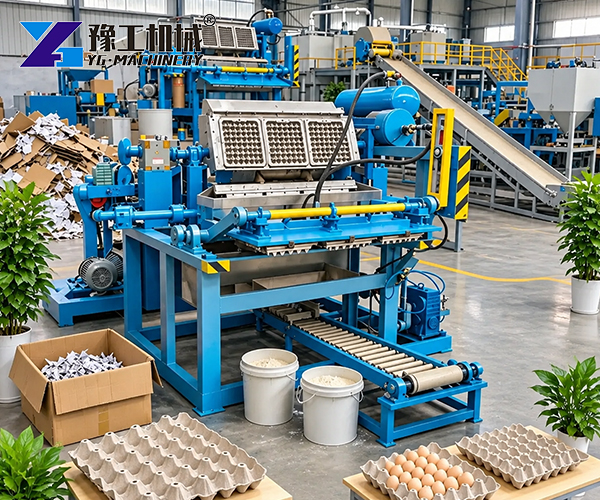
An Egg Tray Machine is an industrial machine that uses waste paper to produce molded pulp egg trays. It helps businesses turn recycled materials into useful packaging products for eggs and other fragile items. The machine uses a pulp molding process to shape, dry, and form paper trays with different sizes and designs.
For egg farms, packaging manufacturers, and recycling businesses, this equipment offers a practical way to produce protective packaging while making good use of waste paper. Buyers can choose different production models based on their required output, available space, and business plans.
Egg Tray Machine Technical Specifications
YG Machinery offers several models to meet different production needs. The following table shows the main technical specifications of each model.
| Model | Capacity (pcs/h) | Forming Mould Qty | Total Power (kW) | Electricity (kW/h) | Workers Needed |
| YG-1*3 | 1,000 | 3 | 40 | 28 | 3–5 |
| YG-1*4 | 1,500 | 4 | 40 | 29 | 4–6 |
| YG-3*4 | 2,500 | 12 | 50 | 35 | 4–6 |
| YG-4*4 | 3,500 | 16 | 60 | 42 | 4–6 |
| YG-4*8 | 4,500 | 32 | 130 | 91 | 4–6 |
| YG-5*8 | 5,500 | 40 | 140 | 98 | 5–7 |
| YG-6*8 | 7,000 | 48 | 186 | 130 | 6–8 |
These models cover different production requirements, from small and medium-sized businesses to larger industrial operations. Buyers can compare hourly output, mould quantity, power requirements, and labor needs before selecting a suitable configuration.
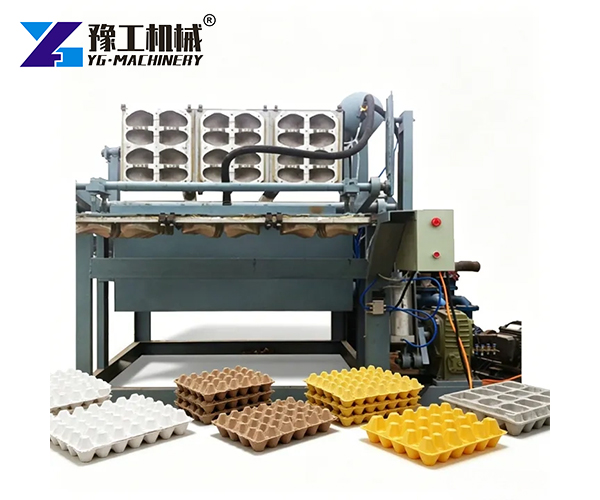
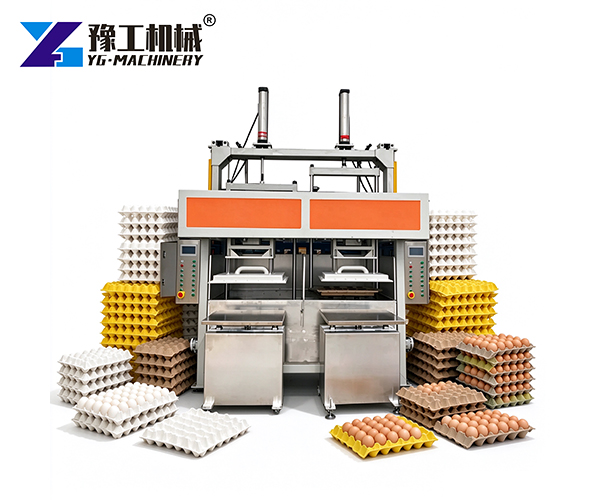
How Waste Paper Becomes Egg Trays
The production process transforms waste paper into molded packaging through several connected stages. Each stage helps create trays with a stable shape and suitable strength.
1. Pulp Preparation
Waste newspapers, cartons, and other suitable paper materials enter a pulper. Water and mechanical force break them down into pulp. The pulp then moves into a mixing tank for further preparation.
2. Pulp Conditioning
The operator adjusts the pulp consistency by adding water and, when necessary, suitable additives. Proper mixing helps the material spread evenly across the mould surface.
3. Moulding and Shaping
The pulp enters the forming system. Moulds absorb the pulp and shape it into egg trays. The machine removes excess water, leaving wet trays with the required shape and compartment design.
4. Drying and Finishing
Wet trays move through a drying system to remove moisture. Depending on the production line design, drying can use hot air or other suitable heating methods. Workers then inspect, stack, and package the finished products.
A complete egg tray production machine connects these stages to support continuous manufacturing and reduce unnecessary manual handling.
Advantages of an Egg Tray Making Machine
A modern pulp molding production line offers several benefits for packaging manufacturers and recycling businesses.
- Uses Recycled Paper: Waste newspapers, cartons, and other suitable paper materials serve as the main raw materials. This helps reduce paper waste and supports resource recycling.
- Produces Protective Packaging: Molded pulp trays have multiple compartments that help separate eggs and reduce direct contact during handling and transportation.
- Supports Different Product Designs: Manufacturers can use different moulds to produce trays with various sizes, shapes, and compartment arrangements.
- Improves Production Efficiency: Mechanical forming and integrated drying systems help reduce repetitive manual work and maintain a steady production flow.
- Allows Business Expansion: Different machine configurations give manufacturers options to increase output as their customer base grows.
These advantages make egg tray making machine a practical choice for businesses looking to develop paper-based packaging production.
Different Egg Tray Products and Their Applications
Egg trays serve different packaging needs depending on egg size, transportation conditions, and customer requirements. Suitable mould designs help manufacturers produce products for different markets.
Common product types include:
- 30-Cell Egg Trays: Commonly used for collecting, storing, and transporting standard-sized eggs.
- Small Egg Trays: Suitable for smaller eggs, including quail eggs, with appropriately designed compartments.
- Egg Cartons: Designed for retail packaging and individual product presentation.
- Custom Molded Pulp Trays: Used for packaging fruit, electronic components, and other fragile products with suitable mould designs.
The main application industries include:
- Poultry Farms: Supplying trays for daily egg collection, storage, and transportation.
- Egg Packaging Companies: Producing packaging for wholesalers, supermarkets, and food distributors.
- Paper Recycling Businesses: Converting collected waste paper into commercially useful products.
- Molded Pulp Packaging Manufacturers: Expanding product lines to serve different packaging markets.
For businesses planning to enter this sector, an egg crate making machine provides an opportunity to combine paper recycling with commercial packaging production.
What Determines Egg Tray Quality?
Finished tray quality depends on several factors throughout the production process. Manufacturers should pay attention to material preparation, mould design, and drying conditions.
Raw Material Quality: Different types of waste paper have different fiber properties. Consistent raw material selection helps maintain stable pulp quality.
Pulp Consistency: The pulp needs suitable fiber distribution and moisture content. Poor mixing may cause uneven thickness or weak areas in the finished trays.
Mould Condition: Clean and well-maintained moulds help the pulp form evenly. Damaged or blocked mould surfaces can affect product shape and appearance.
Drying Control: Suitable drying conditions help remove moisture and maintain tray strength. Excessive or insufficient drying may affect the finished product.
Regular inspection at each stage helps manufacturers reduce defective products and maintain consistent quality.
FAQ about Egg Tray Machine
Q1: What raw materials can an egg tray maker machine use?
It mainly uses waste newspapers, cartons, cardboard, and other suitable waste paper materials. The materials need proper pulping before production.
Q2: Can the egg tray production machine produce different sizes of egg trays?
Yes. Manufacturers can select different forming moulds according to egg sizes, compartment designs, and customer packaging requirements.
Q3: How many egg trays can the machine produce per hour?
Production capacity depends on the selected model. YG Machinery offers models with hourly capacities ranging from 1,000 to 7,000 pieces.
Q4: Does the production line include a drying system?
A complete production line requires a suitable drying system to remove moisture from wet trays. The specific configuration depends on the production line design and customer requirements.
Q5: Is an egg crate making machine for sale suitable for a new factory?
Yes. Buyers can select a suitable production configuration based on their investment budget, factory space, raw material supply, and expected market demand.
Why Choose YG Machinery for Your Egg Tray Machine?
YG Machinery supplies machinery and equipment for international customers across different industries. We aim to provide practical equipment solutions according to customers’ production requirements, factory conditions, and investment budgets.
Our team can help buyers understand available machine models, compare production configurations, and select suitable equipment for their projects. Whether you plan to establish a new egg tray factory or expand an existing packaging business, we can provide product information and quotation support.
In addition to egg tray machine, our product range includes:
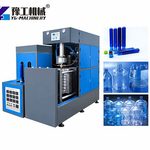
PET Bottle Blowing Machine: For manufacturing plastic bottles used in beverage, water, and packaging industries.
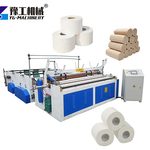
Toilet Paper Making Machine: For processing paper materials into toilet paper products for commercial production.
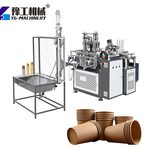
Paper Cup Making Machine: For producing disposable paper cups for beverage shops, restaurants, and food packaging businesses.
Contact YG Machinery today to learn more about our egg tray manufacturing machine options. Send us your required production capacity, product specifications, and factory details to receive a suitable equipment proposal and quotation.