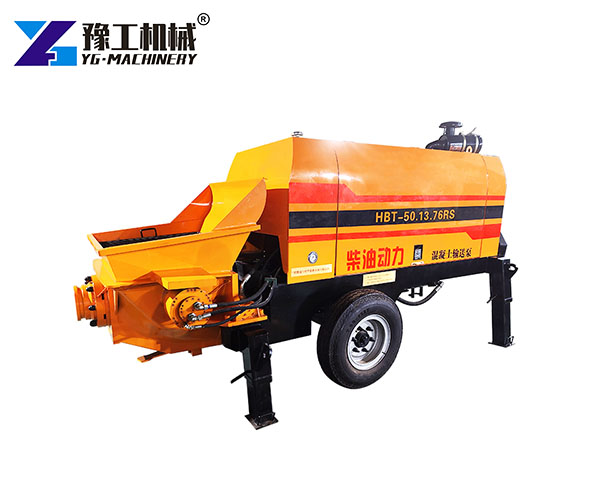
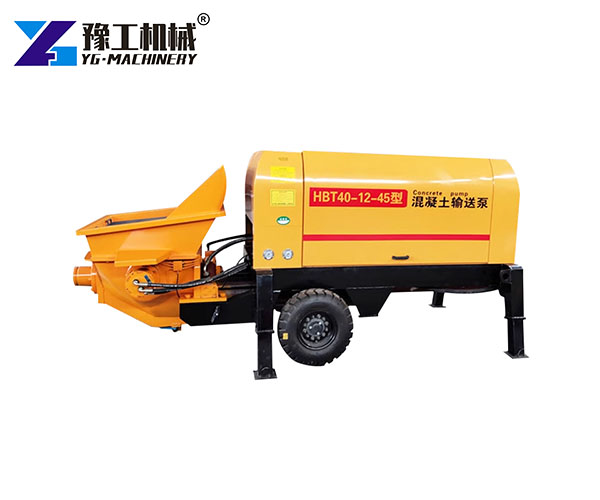
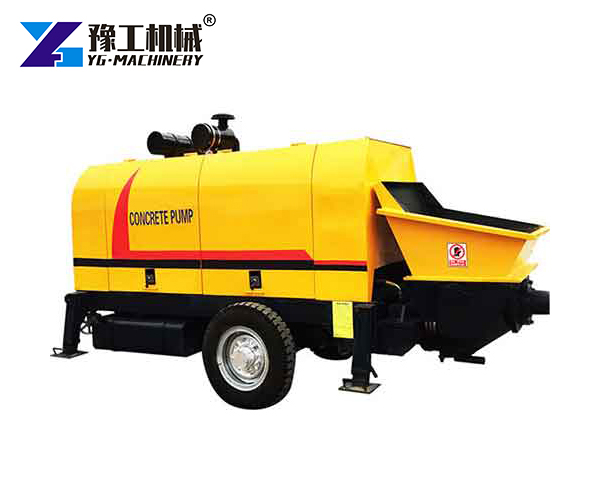
A Trailer Concrete Pump is used to move fresh concrete from the mixing area to the pouring point through delivery pipes. It is useful when concrete needs to travel over a distance or reach a higher position. The pumping method also reduces the need for manual concrete handling. YG Machinery supplies concrete pumping equipment for different construction needs, with electric and diesel options available.
Concrete Trailer Pumps: Models And Specifications
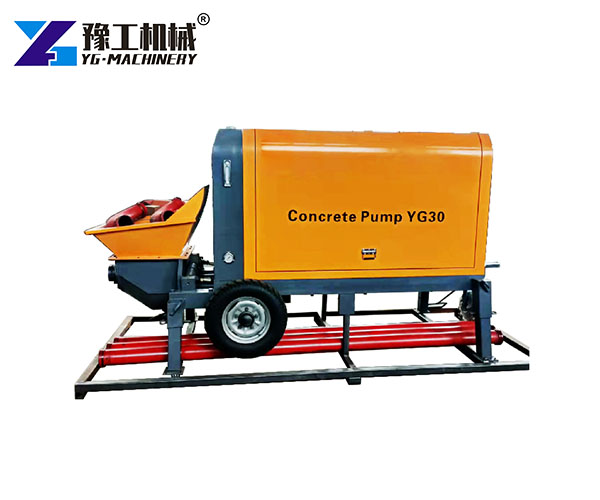
| Model | YG-10 | YG-20 | YG-30 | YG-40 |
| Engine | Electric/Diesel | Electric/Diesel | Electric/Diesel | Electric/Diesel |
| Power | 15kw | 22kw | 37kw | 45kw |
| Max. aggregate size | 15mm | 20mm | 30mm | 40mm |
| Conveying Capacity | 6m³/h | 10-15m³/h | 15-30m³/h | 30-40m³/h |
| Horizontal conveying distance | 100-120m | 100-120m | 150-200m | 200-350m |
| Vertical conveying distance | 20-50m | 50-60m | 80-100m | 120-140m |
| Pipe diameter | 80-100mm | 80-100mm | 80-100-125mm | 80-100-125mm |
| Outlet diameter | 80mm | 100mm | 125mm | 125-150mm |
| Material tank diameter | 100mm | 120mm | 140-160mm | 160-180mm |
| Dimension | 1.8×0.7×1.1m | 2.8×1.1×1.3m | 4*1.4*1.5m | 4*1.5*1.5m |
| Weight | 600kg | 900kg | 1800kg | 2500kg |
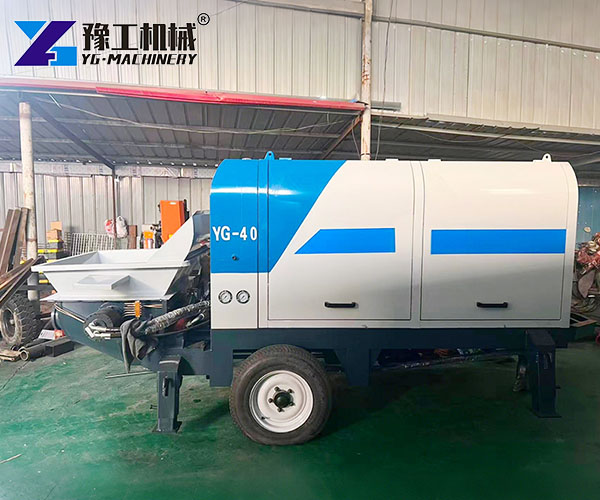
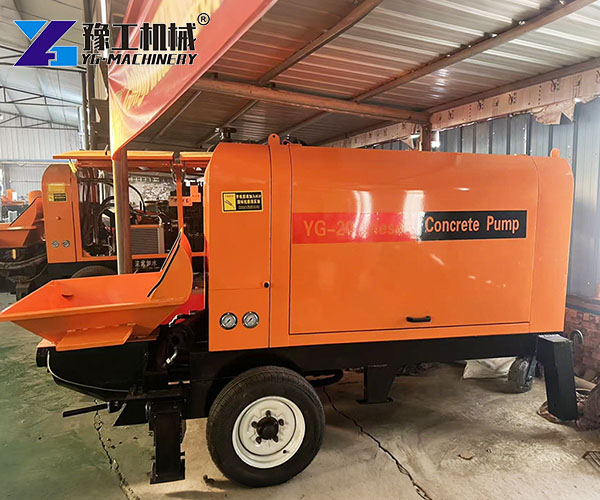
Trailer Concrete Pump: Main Advantages
A Portable Concrete Pump provides a flexible way to move concrete between different working areas. Its trailer design makes it suitable for projects where the pumping position may change during construction.
The main benefits include:
- Flexible site use: The equipment can be moved to suitable working areas as needed.
- Distance delivery: Concrete can be transferred through pipes instead of being carried manually.
- Better site access: Pumping can be useful when concrete trucks cannot reach the final pouring point directly.
- Power flexibility: Electric and diesel options can fit different site conditions.
- Wide application: The equipment can support building, foundation, road, and other concrete work.
This type of equipment is useful when the concrete supply point and pouring point are separated by site layout, elevation, or working conditions.
Trailer-Mounted Concrete Pump: Working Process
A towable concrete pump receives fresh concrete into the hopper and sends it through the delivery pipeline. The pumping system creates the pressure needed to move the concrete to the required position.
The basic process includes:
- Fresh concrete enters the hopper.
- The pumping system moves the concrete toward the delivery pipe.
- Concrete is pushed through the connected pipeline.
- The material reaches the selected discharge point.
- Workers guide the concrete during the pouring process.
Before operation, the pipeline should be connected correctly and checked carefully. The concrete mix should also be suitable for pumping. Good preparation helps reduce blockages and supports stable material flow.

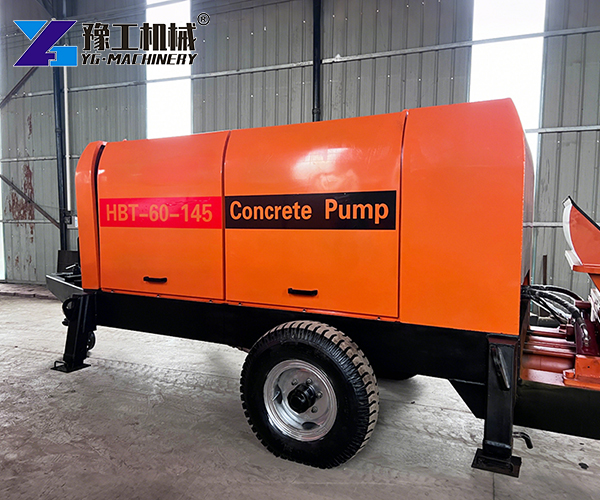
Trailer Concrete Pump for Small Projects: Common Applications
A Small Concrete Pump can be useful for projects where the working area is limited or where concrete must be delivered to specific points through a pipeline.
Common applications include:
- Residential and commercial building construction
- Building foundations and structural work
- Concrete floors and slabs
- Road and bridge construction
- Tunnel and underground projects
- Concrete repair and extension work
- Sites with limited truck access
The pumping method is practical when the final pouring area is not directly beside the concrete mixing or loading point. It can also help workers control where the concrete is discharged.
The suitable equipment depends on the project layout, concrete demand, delivery route, and working environment.
Portable Concrete Pump for Small Projects: Buying Factors
Choosing the right equipment requires more than checking the listed output. The machine should match the working conditions and the concrete requirements of the project.
Important factors include:
Concrete demand: Estimate how much concrete the project needs during normal operation. This helps avoid choosing equipment that is too small or unnecessarily large.
Delivery distance: Check both horizontal and vertical distance from the pumping position to the pouring point. The pipeline route should also be considered.
Aggregate size: Make sure the concrete material is suitable for the selected pumping system and delivery line.
Power source: Consider whether electric or diesel power is easier to use at the job site.
Pipeline layout: Long pipelines, bends, and elevation changes can affect the pumping process. A clear pipeline plan is important before installation.
After-sales support: Spare parts, technical support, and communication with the supplier are also important for long-term use.
When searching for a concrete pump for sale, it is better to provide the supplier with project details instead of comparing machines only by price. This can help avoid an unsuitable configuration.
Concrete Trailer Pumps: FAQ
Q1: How should the pump be cleaned after daily work?
The pump and delivery line should be cleaned after use. Residual concrete should not be allowed to harden inside the system. Operators should follow the supplier’s cleaning procedure and use suitable cleaning tools.
Q2: What routine maintenance does a concrete pump need?
Regular checks should cover moving parts, seals, connecting points, lubrication points, and wear parts. Any abnormal noise, leakage, or unusual vibration should be checked before the next working cycle.
Q3: What should be prepared before the first use of a new machine?
The operator should read the manual, inspect the machine, check all connections, and make sure the working area is ready. A trial run can also be arranged according to the manufacturer’s instructions before full operation.
Q4: How can concrete pipe blockages be handled safely?
The machine should be stopped before checking a suspected blockage. Operators should never open a pressurized pipe directly. The blockage should be handled according to the manufacturer’s safety instructions.
Q5: Can spare parts be replaced during long-term use?
Yes. Wear parts may need replacement after extended operation. Using suitable replacement parts and following the supplier’s maintenance recommendations can support normal equipment service.
About YG Machinery: Trailer Concrete Pump Supplier
YG Machinery is a machinery manufacturer with more than 20 years of industry experience and sales to more than 200 countries and regions. We provide factory direct equipment, configuration support, and overseas technical service. Our product range also includes Floor Shot Blasting Machine and Roller Machine for Roads. Contact YG Machinery for equipment selection and a quotation based on your project needs.【WhatsApp/WeChat/Phone/Skype】+86 13937183602