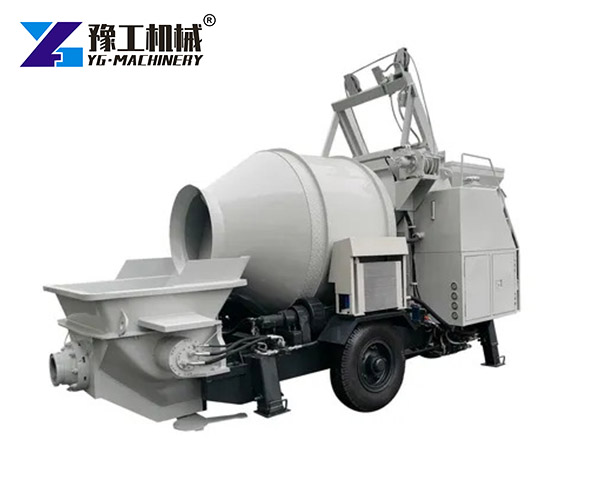
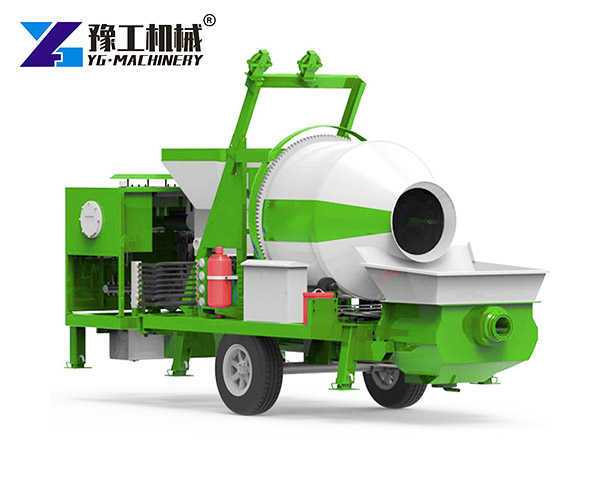
A Concrete Mixer Pump is a practical machine for contractors. It mixes and pumps concrete on site. This saves time and reduces labor.
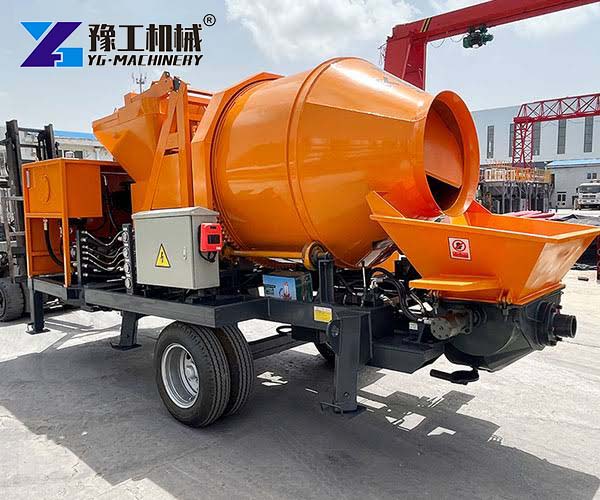
The machine combines a mixer and a pump on one frame. It mixes cement, sand, aggregate, and water. Then it pumps fresh concrete through pipes to the pour area. When mounted on a trailer, it is called a mobile concrete mixer with pump.
A Mini Concrete Mixer Pump suits small projects and tight spaces. Common jobs include rural houses, floors, columns, roads, bridges, and tunnels. A contractor in Kenya used one for village homes. He finished each floor faster and cut labor costs.
Key Specifications of Concrete Mixer With Pump Machine
| Maximum Theoretical Concrete Mixing | M³/h | 15 |
| Maximum Theoretical Concrete Output | M³/h | 30 or 40 |
| Theoretical maximum transmission distance | m | Vertical 50/Horizontal 200 |
| Distribution Valve Form | S valve | |
| Hopper Volume*Height | L*mm | 600×1080 |
| Pumping Motor Power | KW | 30 or 45 |
| Winch Motor Power | KW | 5.5 |
| Hydraulic Oil Form | open circuit | |
| Rated Speed | rpm | 1480 |
| Fuel Tank Capacity | L | 170 |
| Weight | kgs | 3500 |
| Concrete Delivery Pressure | Mpa | 6 |
| Concrete Cylinder Specification*Stroke | mm | φ180 * 800 or 200 * 800 |
| Spout Diameter | mm | φ180 |
| Mixing Motor Power | KW | 8 or 4 |
| Pump Motor Power | W | 550 |
| Maximum Aggregate Size | mm | Grait:40MM; Gravel:30MM |
| Voltage | V | 380 |
| Dimensions (L * W * H) | mm | 4200x2100x3300 |

Advantages of Concrete Mixer With Pump Machine
This equipment offers clear benefits for small and medium jobs.
One machine, two jobs. Mixing and pumping happen at the same time. This keeps concrete fresh and reduces waiting.
Easy to move. The trailer design lets one worker move it around the site. It fits narrow roads and tight spaces.
Lower cost. You need less equipment and fewer workers. This saves rental and labor costs.
Stable flow. The S-valve and hydraulic system give smooth pumping with fewer blockages.
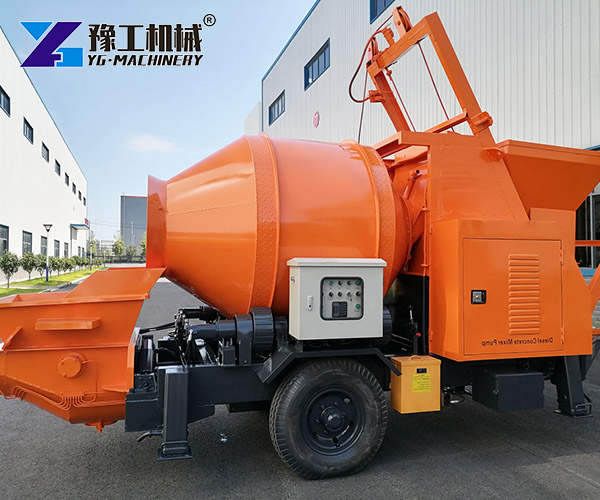
Power options. A Diesel Concrete Mixer Pump works well in remote areas without stable electricity.
Unlike a standard cement mixer pump, this unit can send concrete directly to the pour point. It is a good choice for scattered job sites and projects far from a batching plant.
How a Portable Concrete Mixer Pump Works
The work flow is simple and continuous.
Loading. Workers load cement, sand, aggregate, and water into the hopper.
Mixing. The mixing system blends the materials evenly.
Pumping. The mixed concrete enters the pumping system. Pistons push it through delivery pipes.
Delivery. The S-valve controls the flow. Concrete moves to the target area without stopping.
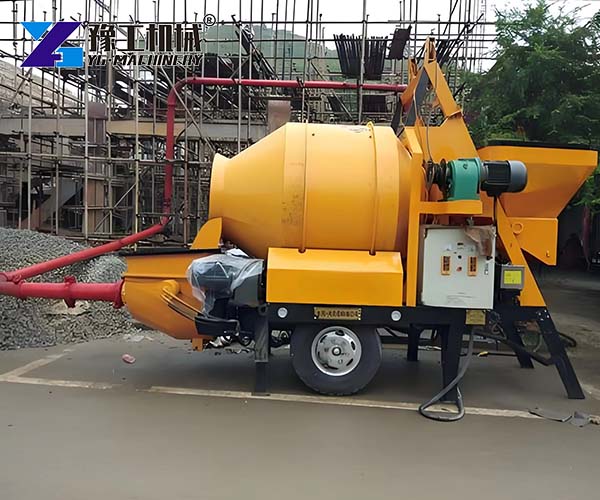
Main core parts include the mixing drum, hopper, S-valve, concrete cylinders, hydraulic oil tank, and delivery pipes. Check these parts often. Clean pipes after each pour. Never run the pump with an empty hopper for a long time.

How to Choose the Right Machine
Before you buy, think about your project needs.
Project size. Small jobs may need a mini model. Larger jobs may need higher output.
Power supply. Choose diesel for remote sites. Choose electric for fixed sites with stable power.
Aggregate size. Make sure the machine can handle your gravel or crushed stone.
Delivery distance. Check vertical and horizontal pumping distance.
Budget. Compare price, fuel use, and maintenance cost.
For daily care, check hydraulic oil and grease bearings. Clean the hopper and pipes after use. Inspect the S-valve and wear plate regularly. These simple steps extend machine life.
FAQ
Q: What types of concrete can this concrete mixer pump handle?
A: It works well with standard concrete mixes. It can also handle fiber-reinforced and lightweight concrete with proper mix design. Always check the maximum aggregate size before use.
Q: Can it work in remote areas without electricity?
A: Yes. The diesel model is designed for sites with no stable power supply. It runs on its own fuel tank, so you can work anywhere.
Q: What is the maximum aggregate size, and why does it matter?
A: The machine accepts gravel up to 40 mm and crushed stone up to 30 mm. Larger stones can block the pipes or damage the pump. Always screen your aggregate before loading.
Q: How do I prevent pipe blockages?
A: Use the correct aggregate size and keep the mix consistent. Avoid long pauses during pumping. Clean the pipes after every pour. If a blockage happens, stop the pump and check the pipe bends first.
Q: Does YG Machinery provide after-sales support?
A: Yes. We offer a one-year warranty on main parts. We also provide spare parts and technical support. Our team can help with installation and training.
Why Buy Concrete Mixer Pump from YG Machinery
YG Machinery has more than ten years of experience in construction equipment. Our machines are exported to over 20 countries. We also offer Trailer Concrete Pump and Self Loading Concrete Mixer for different job needs.
Need a reliable machine for your next project? Contact YG Machinery today for a free quote and professional advice.【WhatsApp/WeChat/Phone/Skype】+86 13937183602